

Impact energy management
The rear crash buffer device is described as absorbing impact energy and helping protect workers, equipment and passing vehicles.
Road operation safety vehicle
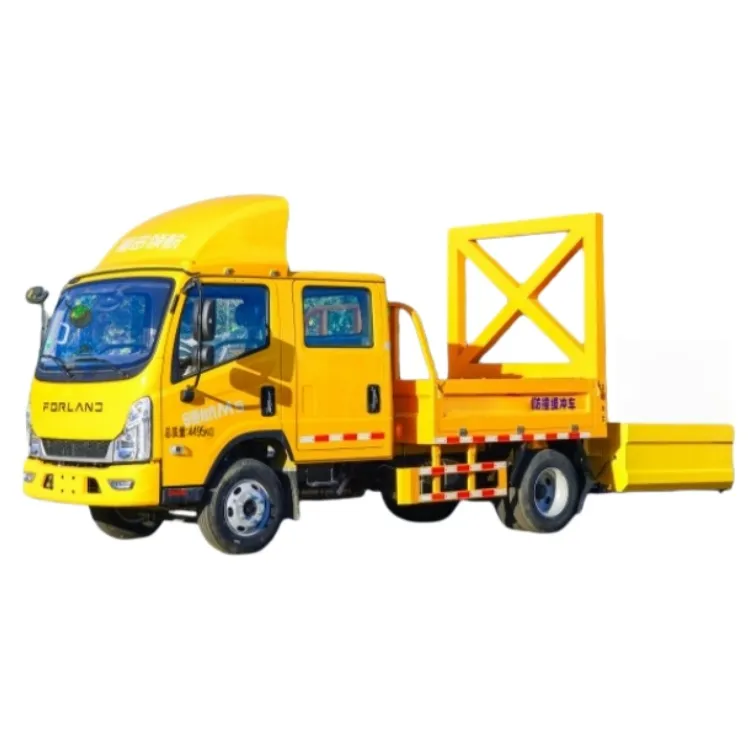
For teams evaluating crash buffer truck manufacturer and road safety truck supplier, the Foton Linghang M5 crash cushion truck combines a rear impact buffer, clear warning presence and a working configuration built for highway and municipal road sites.
How to read the role
A crash buffer truck is easiest to evaluate when the protection role, road-operation environment and configuration table stay separate.
The rear crash buffer device is described as absorbing impact energy and helping protect workers, equipment and passing vehicles.
The product is positioned for highway and municipal road construction and maintenance sites where warning presence and mobility matter.
The page presents it as an essential safety support vehicle for road operation sites rather than a general-purpose cargo truck.
Warning presence is part of the product story and should be considered together with the operating site and maintenance plan.
Product facts
The configuration table gives a compact view of the truck’s base setup, allowing procurement teams to start a discussion around the right operating context.
| Vehicle type | Crash cushion truck |
|---|---|
| Chassis brand | FOTON |
| Gross weight | 4495 kg |
| Rated load mass | 195 kg |
| Overall dimensions | 5995 × 2100 × 2550 mm |
| Wheelbase | 3360 mm |
| Engine | Quanchai / 112 kW |
| Drive type | 4x2 |
Application route
The page’s own copy points to road construction and maintenance use. Keep the discussion close to that environment.
Use it where traffic control, buffer distance and site protection are part of the operating plan.
The same impact-buffer role helps when road maintenance happens in tighter urban conditions.
The safety support role helps crews focus on maintenance tasks while the vehicle contributes visible protection.
Further reading
These articles help a buyer understand the truck’s technical wording, category difference and road-work use case.
Read the configuration language and road-safety role together before narrowing the order details.
Read the articleSee how this vehicle sits within related road-safety terms and why the distinctions matter.
Read the articleUse the highway work-zone lens to evaluate when the truck’s protection role is needed.
Read the articleQuestions buyers ask
It is used on highway and municipal road construction and maintenance sites to absorb impact energy and protect workers, equipment and passing vehicles.
The rear crash buffer device and road-safety role are the main differences. The page positions the truck as a safety support vehicle for road operation sites.
The page lists vehicle type, chassis brand, gross weight, rated load mass, overall dimensions, fuel type, wheelbase, engine model and power, tire specifications and drive type.
The configuration table lists 4x2 drive type.
Start with the road operation environment, required vehicle configuration and the intended municipal or highway use case so the supplier can match the right model.
Use the product page quote route or contact the company directly to discuss delivery, configuration and project needs.
Bring the road operation environment and configuration needs to the supplier before asking for the next quotation step.
